
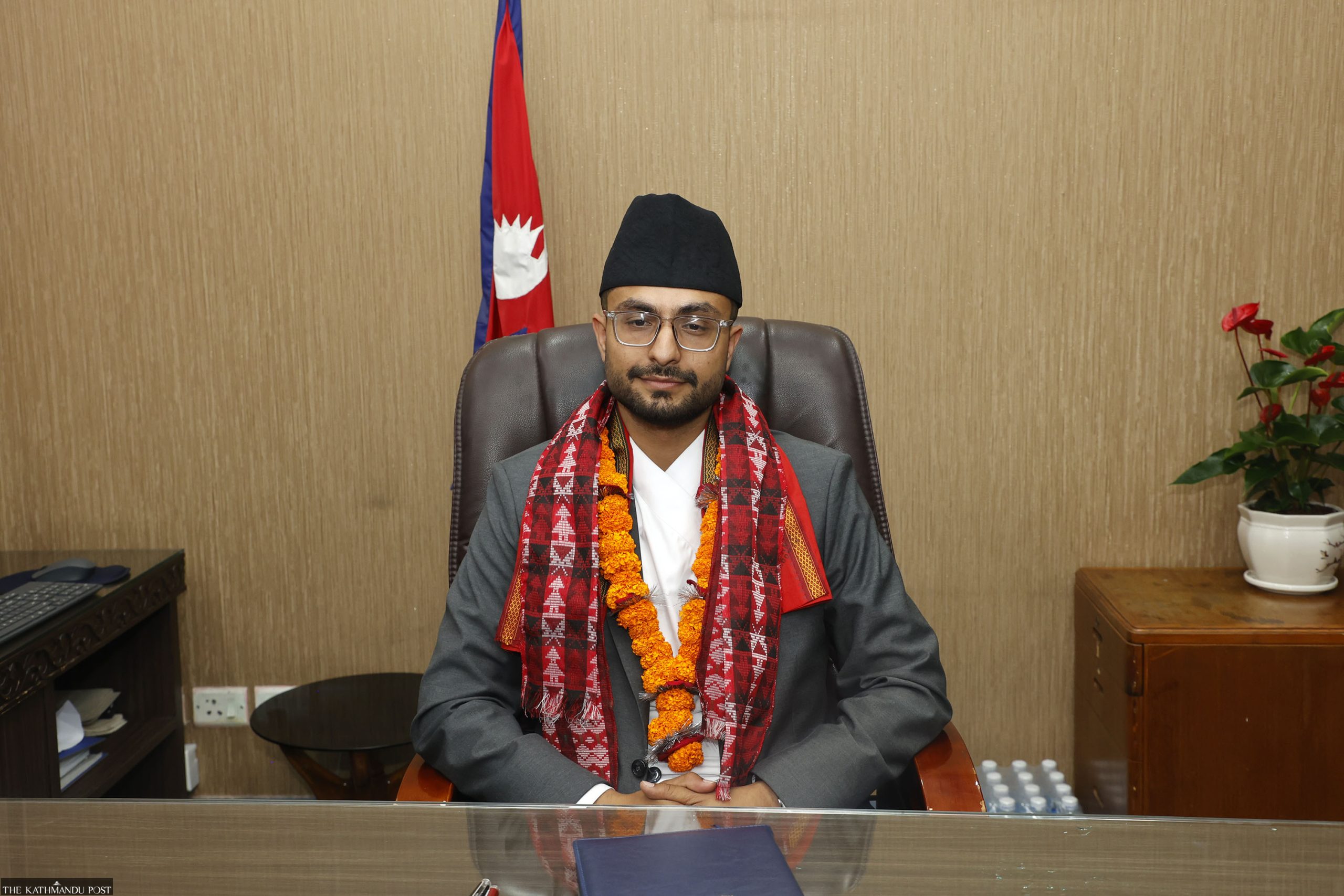
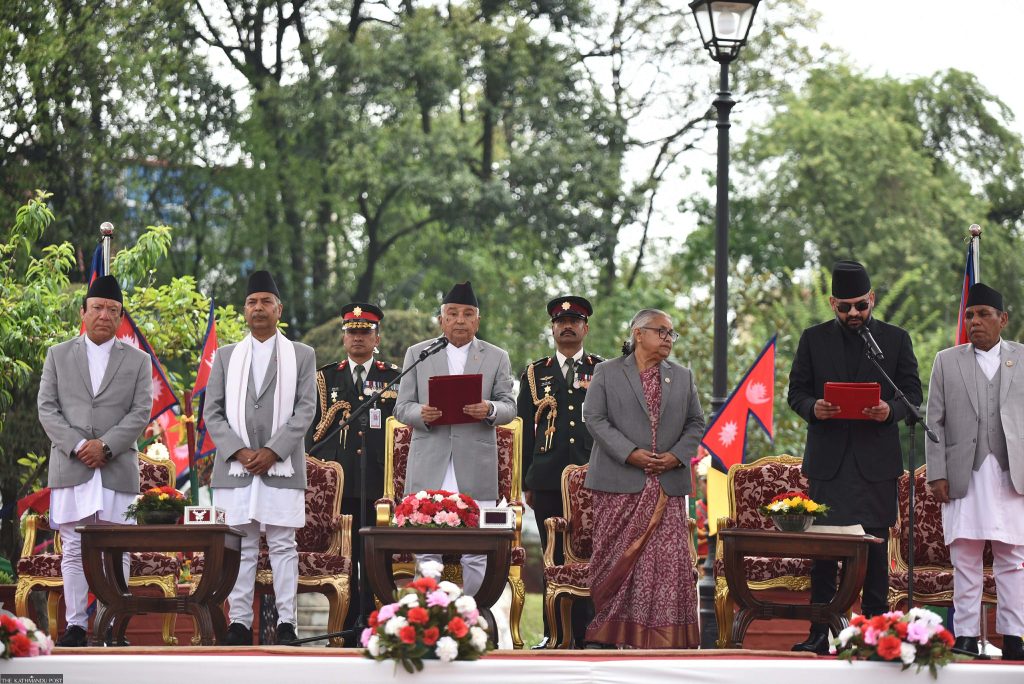
Kathmandu, March 28 — Sasmit Pokharel, aged 30, has taken on the role of Minister for Education, Science and Technology, as well as Youth and Sports within the administration headed by Balendra Shah.
Famous for his strong social media engagement and outspoken political stance, Pokharel has moved from being a first-time federal legislator to a prominent minister responsible for two essential areas. His selection puts him in the middle of ongoing policy changes and organizational conflicts within both education and sports.
Born in Kathmandu, Pokharel obtained his law degree from Kathmandu University following his higher secondary studies in the United States. He is now enrolled in a master’s program at Tribhuvan University and has previously served as a parliamentary intern.
His political career started with Bibeksheel Sajha, where he was involved during the 2017 elections and backed Ujwal Thapa’s campaign. He subsequently became a member of the Rastriya Swatantra Party along with Balendra Shah and was actively engaged in Shah’s mayoral campaign in Kathmandu in 2022. That same year, he ran in the provincial election but was unsuccessful, later serving as an education and urban planning advisor within the Kathmandu Metropolitan City.
Currently in office, Pokharel encounters an urgent policy challenge, involving the implementation of long-overdue legislation aligned with the constitution and federal structure. Drafts of essential laws concerning primary education, higher education, and technical education have been delayed for years. A bill on school education that had reached parliamentary committees was withdrawn following the parliament’s dissolution. This matter even led to a 29-day teachers’ strike before the Gen Z movement gained momentum.
Educational specialists claim the minister needs to focus on creating laws. Professor Sushan Acharya emphasizes that clear regulations should be established before implementing policies, noting that the government must clarify its position on both public and private education. She also advocates for changes in university management, such as removing the prime minister from the position of university chancellor, and replacing politically linked unions with one unified representative organization.
Structural changes are also necessary in appointments within educational institutions, she states, contending that roles should be filled via competitive procedures instead of political distribution. Enhancing teacher skills and updating assessment systems are also emphasized as key focuses.
A significant issue is the slow advancement in executing a report regarding land that has been illegally occupied by Tribhuvan University. Specialists suggest that the new minister, in collaboration with the government, needs to take action to recover institutional assets.
Previous secretary Hari Lamsal highlights five main focuses: establishing a supportive work atmosphere, enhancing service provision, reorganizing overlapping organizations, ensuring the budget aligns with policy objectives, and promoting enduring legal changes. He stresses improved cooperation among federal, provincial, and local authorities.
Education specialist Tika Bhattarai recommends that the minister first seek input from ministry employees to determine essential areas of focus before involving outside parties. He also encourages the minister to implement current suggestions, such as those from the High-Level National Education Commission, and to define cooperation with local authorities within the federal framework.
In addition to education, Pokharel deals with major obstacles in the realm of sports. Nepal’s involvement in the 2023 Asian Games brought attention to an ongoing problem: a substantial team with limited achievements. Nepal sent 253 athletes competing in 29 different sports but managed to win just one silver and one bronze medal, prompting concerns about their approach to participation and overall performance levels.
Experts suggest the minister should establish well-defined guidelines for international involvement, making sure that teams are competitive instead of just symbolic. They also emphasize the importance of focusing on high-potential sports like football, cricket, and volleyball, which have more robust local frameworks and global backing.
Cricket development continues to be a major focus. Multiple stadiums are either being built or not yet finished, such as those in Bhairahawa, Dang, Pokhara, and Janakpur. Finalizing these initiatives and putting the Mulpani international cricket venue into use are considered crucial actions.
Football also brings an urgent challenge. The All Nepal Football Association has faced suspension, and the Dasarath Stadium is still not suitable for significant international games. Addressing these issues and improving infrastructure will be essential for bringing the sport back to normal.
The minister also encounters administrative challenges, such as filling key leadership roles in the National Sports Council, which has been without a member secretary for several months. Specialists believe that prompt appointments may contribute to stabilizing the sector.
Experts in sports policy highlight the importance of concentrating on sports that offer better chances of winning medals, such as martial arts like karate, taekwondo, and judo. Meanwhile, preserving and upgrading current facilities is considered more realistic than investing in new, expensive structures.
The challenge faced by Pokharel involves maintaining a balance between structural reforms, policy delays, and institutional conflicts within two intricate ministries. His capacity to pass legislation, enhance governance, and bring stability to both areas will be closely observed.



Leave a Comment