
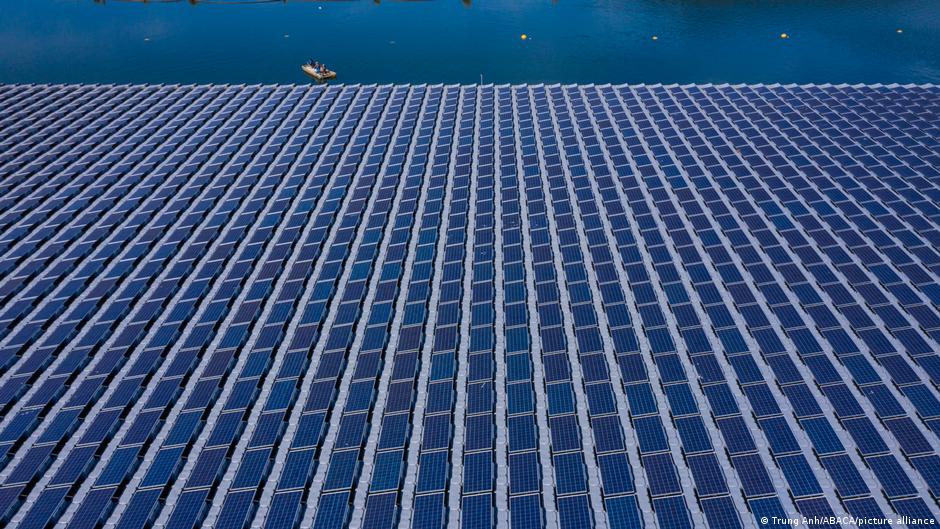
The most affordable energy option globally is expanding at an unprecedented pace, displacing coal, gas, and nuclear power.
Since the beginning of the 21st century, the growth of solar energy has exceeded predictions, outpacing all other energy sources.
Once very costly and limited to distant areas, space travel or pocket calculators, solar panels today — simple to install and use — produce affordable electricity globally.
The world’s solar power capacity has increased dramatically in the past ten years:
– 228 gigawatts in 2015, contributing 1% of the world’s power – 759 GW in 2020, approximately 3% of total energy consumption – 2,919 GW in 2025, as per projections — solar currently accounts for roughly 10% of global energy, surpassing nuclear which stands at 9%
The power source is still expanding at an exponential rate, and if this trend continues, global capacity might reach 9,000 GW by 2030 — sufficient to cover over 20% of the planet’s energy needs.
China leading the way
China is leading the worldIn terms of solar capacity, China leads by a significant margin. The country added 315 GW of new panels in 2025, as reported by the Chinese energy authority, increasing overall capacity to approximately 1,300 GW. Over 80% of all solar panels are currently manufactured in China.
According to data from LowCarbonPower, a company based in Taipei, 11% of China’s electricity is now generated from solar power. In the past ten years, the proportion of coal-fired power, which is very harmful to the environment, has decreased from 70% to 56%. This decline is mainly because of the country’s significant growth in renewable energy sources, particularly solar and wind power.
EU expanding solar grid
The European Union, possessing 406 GW of capacity,is second in the worldWhen it comes to the growth of solar energy. In the EU, solar power provides approximately 13% of the region’s electricity needs. Coal accounts for only 9%, a significant decrease from 2015, when it still supplied a quarter of the EU’s energy.
Pioneering in Europe are Greece, Cyprus, Spain, and Hungary, all producing over 20% of their electricity through solar power. Even Germany, despite having fewer sunny hours, reaches 18%.
With its 119 GW, Germany leads in Europewhen it comes to installed solar panels, followed by Spain with 56 GW.
Although Trump, US solar ranks third
Even with renewable energy being underminedunder the Trump administration, the US continues to hold the third position globally in terms ofsolar energy expansion.
The United States, with 267 GW of capacity, can meet approximately 8% of its overall electricity needs. In 2015, this figure stood at just 1%. During the past decade, the share of coal-generated power has decreased by half, dropping from 34% in 2015 to 17% in 2025.
Solar energy is also expanding in India, Pakistan, and Brazil.
India, ranked fourth with 136 GW of solar power, currently produces approximately 8% of its electricity for a population of 1.45 billion. Japan comes in fifth, with a solar capacity of 103 GW that meets 11% of its energy needs.
Across the Pacific, Brazil is also expanding its solar energy infrastructure and currently produces approximately 10% of its total electricity needs. Alongside hydropower, wind, and biomass, 88% of the nation’s electricity is sourced from renewable resources.
In 2015, Pakistan and South AfricaEach generated less than 1% of their power using solar panels. After a decade, this has increased to 20% and 10% respectively.
Solar power is considerably more affordable.
In a single hour, the amount of sunlight reaching Earth provides more energy than human civilization requires for an entire year. By placing solar panels on less than 1% of the planet’s area, we could meet the world’s total energy needs.And solar power is becoming increasingly affordable.
Significantly improved components and large-scale manufacturing have reduced costs by approximately 90%, making solar power the most cost-effective source of electricity in numerous regions globally.
In areas with abundant sunlight, extensive solar farms can generate power for approximately 1 euro cent (1 US cent) per kilowatt-hour. In Germany, the cost ranges from 4 to 5 cents.
Solar power generated by rooftop panels is typically much more affordable compared to electricity supplied by the traditional power grid, andIn numerous European nations, it now costs less.More than half of the typical electricity cost. Keeping solar power in batteries increases the cost by an additional 2 to 3 cents per kilowatt-hour.
As per information from Germany’s Fraunhofer Institute for Solar Energy Systems, the present cost of nuclear energy ranges from 14 to 49 euro cents per kilowatt-hour (16-56 US cents). The price for coal power falls between 15 and 29 cents per kilowatt-hour, whereas natural gas is priced between 15 and 33 cents.
Solar energy is also transforming transportation, and heating systems.
In 2024, the global grid saw the addition of power stations with an overall capacity of 632 GW. Out of this, 72% came from solar energy, followed by wind at 18%, gas at 4%, coal at 3%, hydro at 2%, and nuclear at 1%.
Affordable solar energy is also transforming how we warm our residences and travel. Electric vehicles tend to be much more cost-effective to run, especially when powered by solar electricity generated from rooftop panels. In Germany, these savings can exceed 80% compared to traditional diesel or gasoline vehicles.
Keeping a building warm using a heat pumpis typically also more beneficial compared to heating systems that use oil or gas. In the European Union, households often manage to save over 30% on their heating expenses. When the electricity needed to operate the heat pump is supplied by the homeowner’s own solar panels, these costs decrease even more.
Solar expected to become the world’s leading energy source
Numerous early predictions significantly undervalued the development of the solar sector. According to the International Energy Agency’s annual global energy report from 2020, global solar growth was expected to reach approximately 120 GW by 2024. However, in reality, a staggering 597 GW was installed that year, almost five times the projected figure.
Energy specialists currently think that solar energy will ultimately emerge as the planet’s primary energy source. Nevertheless, it is still unclear how quickly this transition will occur.
Scientists from the Lappeenranta-Lahti University of Technology in Finland have developed a vision for a globally economical energy system. According to their model, 76% of the world’s energy would be sourced from solar power.Wind powerwould account for an extra 20%, with the remaining sourced from hydro, biomass andgeothermal energy.
Infrastructure, digitalization challenges ahead
Industry specialists have noted the shift towards electric vehicles and the broad adoption ofelectric heat pumps, among others, are expected to increase the global electricity demand by more than double by 2050.
This will involve expanding power networks, incorporating solar energy, and creating battery storage systems for use during the night. However, global storage capabilities must increase substantially.Electric carBatteries may one day act as temporary storage, helping to support electrical grids.
Accelerated digitalization will also play a key role in achieving an efficient electricity supply, facilitating the best possible alignment of electricity usage and production. This could enable, for instance, electric cars to start charging automatically when there is an abundant and low-cost solar power availability in the grid.This piece was first released in German.
Author: Gero Rueter







Leave a Comment